
Blades for Packaging & Film Converting Lines

Knife sets and tooling engineered to reduce dusting, burrs, edge wave, and buildup across film, foil, laminates, and label stock.

Converting Requires More Than “Sharp”

Packaging and film converting lines rely on blades that perform consistently under high speed, tight tolerances, and sensitive materials. Whether you’re slitting BOPP/PET, perforating easy-tear features, trimming edges, or metering coatings, results depend on cut mechanics + knife geometry + setup stability.
Davion supports converting operations with made-to-print blades and knife systems designed to improve:
Converting Requires

What We Supply for Converting Lines

Common converting tooling and knife types:

Support options (as required):

Converting Lines

Support options (as required):

Slitter Blades, Circular Blades, Perforating & Serrated Blades, Straight Blades, Scraper / Doctor Blades, Custom Blades

Typical Converting Operations We Support

Slitting (Shear / Score / Crush)

Slitting is the most common converting pain point because small geometric or setup issues show up as dusting, burrs, lane variation, and unstable rewinds. Knife selection should match your web type, thickness, and station mechanics.
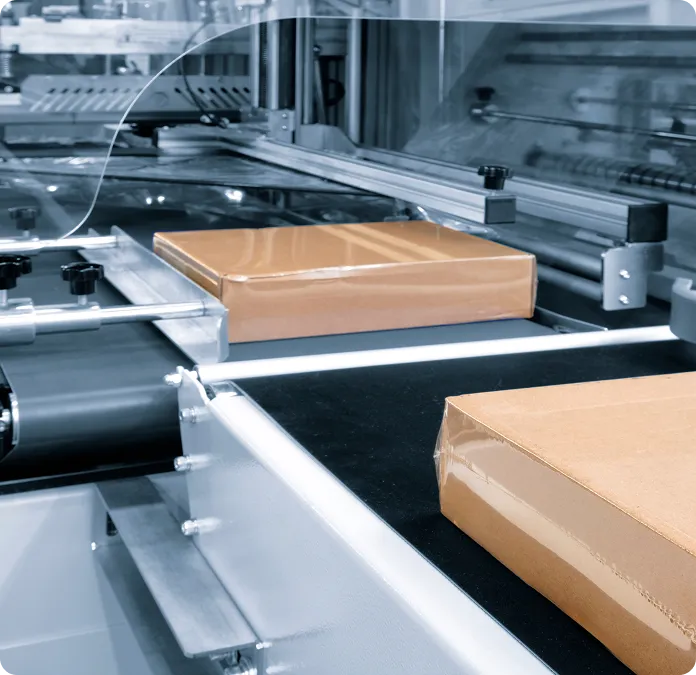
Perforation performance is driven by pattern definition (pitch/tie) and penetration stability. The right tooth geometry produces reliable tear behavior without ragged edges or premature opening.
Edge trim removal and scrap chopping require blades that hold an edge and resist buildup. Stability here prevents downstream tension problems and improves roll quality.
Cut-to-length and pouch stations depend on controlled edge geometry and repeatable alignment to avoid tearing and dimensional drift.
Doctoring and scraping duties demand consistent edges and surface strategies to reduce pickup, streaking, and chatter—especially with adhesive chemistries.
Typical Converting Operations We Support​

Packaging & Converting Blades

Clean Cuts at Speed. Stable Performance on Web Lines.

Packaging and film converting demand consistent cut quality across high-speed web processes. Blade geometry, sharpness, and wear behavior directly affect edge quality, dusting, and machine uptime. We supply blades matched to your material, line speed, and slitting or cutting method.

Request a Packaging Blade Quote

Share your material, line setup, or current issues—we’ll match the right blade solution.
Profiled Blades   Formed Blades  Multi-Step Blades  Assembly Blades  |   Custom Geometry
Aligned with high-speed converting lines and consistent cut quality.

Applications & Variants (Blade Styles & Options)

Shear Slitting Knife Sets (Top/Bottom)

What it is: Matched knives that shear the web with controlled overlap/clearance.

When used: Clean edges and low dusting are required on films, foils, and laminates.

Score Slitting Knives

What it is: Knives designed to score against an anvil/backing rather than shear fully.

When used: Certain papers/laminates where scoring provides more stable separation.

Crush-Cut Knives

What it is: Knives that crush material against a hardened shaft/anvil.

When used: Softer webs where crush slitting is preferred for process simplicity.

Razor Slitting Systems (Holder + Blades)

What it is: Disposable razor blades used in slitting holders (station-defined).

When used: Very thin films requiring low cutting force and quick blade changes.

Narrow-Width Slitting for Label Stock

What it is: Knife sets optimized for high slit count and tight lane widths.

When used: Labels and specialty webs where lane-to-lane consistency matters.

Foil & Foil-Laminate Slitting Knives

What it is: Knife geometries tuned to avoid tearing and edge wave in fragile structures.

When used: Barrier laminates and foils with sensitive crack propagation behavior.

Nonwoven Slitting Knives (Low Fuzz)

What it is: Edge geometry selected to reduce fiber pull and fuzzing.

When used: Nonwovens where edge cleanliness impacts bonding/sealing.

Anti-Stick Slitting Knives for Adhesive Films

What it is: Surface strategies to reduce pickup and heat at the edge.

When used: PSA films, tacky laminates, foams, and residue-forming webs.

Perforating Wheels (Easy-Tear)

What it is: Rotary tooth-pattern tools creating controlled tear lines.

When used: Pouches, wrappers, and packaging formats requiring reliable opening.

Micro-Perforation Wheels

What it is: Fine-pitch perforations for controlled tear with minimal dust/aesthetic impact.

When used: Thin films and label stock where appearance matters.

Registered Perforation (Pattern-to-Print)

What it is: Perforation patterns aligned to print repeats or sealing features.

When used: Printed packaging where tear lines must align with graphics or functional zones.

Serrated Straight Trim Knives

What it is: Straight knives with serration for improved bite on slippery webs.

When used: Trim stations where smooth edges skid and cause inconsistent cutting.

Rotary Cut-Off Knives

What it is: Circular knives for cross-cut/cut-to-length in continuous motion.

When used: High-speed web lines requiring repeatable cut length without stopping.

Guillotine / Cross-Cutter Straight Blades

What it is: Straight blades used for intermittent or guillotine cut stations.

When used: Pouch making and sheet operations with precise cut-to-length needs.

Scrap Chopper Knives

What it is: Blades that chop edge trim scrap into manageable pieces.

When used: Trim removal systems where scrap handling is a bottleneck.

Doctor Blades for Coating/Metering

What it is: Thin blades that meter coating weight or wipe rolls clean.

When used: Coating/laminating lines where streak control and consistent film are critical.

Chambered Doctor Blades (Containment + Metering)

What it is: Blades designed for enclosed chamber systems to stabilize fluid delivery.

When used: High-speed systems where leak control and metering stability matter.

Build-to-Sample Converting Knives

What it is: Blades replicated from existing knives when drawings are not available.

When used: Legacy equipment or OEM parts without accessible documentation.

Materials, Heat Treat & Coatings (Brief + Cross-Links)

Converting blades typically fail by edge wear (dusting), chipping, corrosion/pitting, or pickup. The right material stack is application-specific.

Carbon & tool steels

common for general converting wear/toughness balance. → Materials: Carbon & Tool Steels

Stainless steels

for humid/wet exposure and certain washdown-adjacent stations. → Materials: Stainless Steels

Carbide

for abrasive webs and long-run wear needs (application dependent). → Materials: Carbide

Coatings & surface treatments

reduce pickup and wear; selection depends on chemistry and temperature. → Coatings & Surface Treatments

Heat treatment & hardness

tuned to maintain edge stability without brittle chipping. → Heat Treatment & Hardness
Materials, Heat Treat & Coatings

Quality & Inspection (No Fake Certs)

In converting, small variation can show up as major quality loss across hundreds of lanes or thousands of meters of web. Inspection scope can be aligned to what drives your results:

Quality & Inspection

What We Need From You to Quote (Checklist)

To quote converting blades accurately, we need knife specs plus enough process context to match the cutting mechanics.

Files & geometry

For slitting

For perforation / serration

For cut-off / trim / scrap

For doctoring/coating

Commercial & documentation

Prototyping, Repeat Orders & Lead Time

Prototype orders

validate cut edge quality, rewind stability, and defect reduction before scaling.

Repeat orders

controlled revision handling to maintain geometry and performance intent.

Typical lead time

[LEAD TIME] (depends on material, heat treat, coatings, and inspection scope).

Minimum order quantity

[MOQ] (many items can start small; volume improves pricing)
Prototyping, Repeat Orders & Lead Time

Request a Quote

Share your web type, station method, and existing knife specs—or send a sample—and we’ll define a quote scope aligned to your quality targets.

Frequently Asked Questions

Which slitting method is best: shear, score, or crush?
Shear slitting often produces the cleanest edge, while score and crush can be better matches for certain materials and line configurations. Choice depends on web type, thickness, speed, and defect history.
Dusting and burrs commonly come from edge wear, incorrect overlap/clearance, runout/stack issues, or a mismatch between knife geometry and slitting method.
Edge wave and telescoping are often linked to slit edge quality, lane variation from runout, tension settings, and alignment. Knife sets and spacer consistency play a major role.
Perforation is defined by pitch, tie width, and penetration depth, plus pattern repeat if registration is required. If you share your material and target tear strength, we can recommend a starting pattern.
In many cases, coatings and surface finishes reduce pickup and drag. Suitability depends on adhesive chemistry, temperature, and the edge prep used.
Yes. Matched sets and controlled stack components improve repeatability and reduce setup time across changeovers.
Yes—send a sample or provide clear photos and measurements. We support build-to-sample workflows with revision control for reorders.
Knife dimensions (OD/ID/thickness or L/W/T), mounting interface details, material being processed, slitting method/station type, and the defect you’re trying to solve.