
Top/bottom knife sets, spacers, and edge prep engineered to reduce dusting, burrs, and edge wave in converting lines.
Slitter blades (slitter knives) are circular cutting tools used to split webs into narrower rolls in converting and manufacturing lines. Slitting performance is a system result: knife geometry and material matter, but so do slitting method (shear/score/crush), overlap/clearance, side-load, runout, holder stiffness, and spacer stack accuracy.

For general circular knife shapes beyond slitting, see 1.3 Circular Blades.
What it is: Upper circular knives that shear against bottom knives/anvils.
When used: Film/foil/paper laminates where clean edges and low dusting are required.
What it is: Lower mating knives that define the shear interface and overlap.
When used: When edge quality depends on consistent overlap and stable knife-to-knife contact.
What it is: Matched shear knife pairs designed to cut as a system.
When used: High-speed lines where repeatable cut mechanics reduce edge defects.
What it is: Knives designed to score against an anvil/backing rather than shear fully.
When used: Certain papers, laminates, and coated webs where scoring improves control.
What it is: Knives used to crush the web against a hardened shaft/anvil.
When used: Softer materials (e.g., tissue) where crush slitting is preferred for process simplicity.
What it is: Razor-based slitting approach using disposable blades in holders.
When used: Very thin films and sensitive webs where minimal cutting force is critical.
What it is: Knife sets optimized for tight slit widths and high slit count.
When used: Label stock, specialty films, and precision converting with narrow lanes.
What it is: Knife and edge preps selected for thin metallic foils and delicate edge integrity.
When used: Foil and foil-laminate converting where tearing and edge wave must be minimized.
What it is: Knife geometry tuned to reduce fiber pull and fuzzing.
When used: Nonwovens where edge cleanliness affects downstream sealing or bonding.
What it is: Knife/coating/finish selections to reduce pickup and build-up.
When used: PSA films, tacky laminates, foams, and heat-sensitive materials.
What it is: Material selections biased toward wear resistance under abrasive fillers/coatings.
When used: Coated abrasives, filled films, or contamination-prone webs.
What it is: Corrosion-resistant knives for wet and cleaning environments.
When used: Food and hygienic lines where corrosion pits quickly degrade edge performance.
What it is: Reinforced edge prep to stabilize the edge under load.
When used: When chipping, edge breakdown, or inconsistent edge finish is observed.
What it is: Knives specified and inspected for runout relative to functional datums.
When used: High slit count lines where runout shows up as lane-to-lane variation.
What it is: Tools that add perforation while slitting, depending on station design.
When used: Consumer packaging lines needing tear features with web separation.
What it is: Knife interfaces designed to work with differential shaft systems.
When used: Rewind slitting setups where tension control and slip are part of the system.
What it is: Knife/spacer stacks built around controlled thickness and repeatability.
When used: When slit width accuracy and repeat setups are critical across changeovers.
What it is: Replacement knives recreated from a physical sample and verified dimensions.
When used: Legacy equipment or when drawings/CAD are not available.
Slitter knife performance is usually limited by wear (dulling/dusting), edge damage (chipping), sticking (pickup), or corrosion.
common for balanced wear/toughness in many slitting duties. → Materials: Carbon & Tool Steels
corrosion resistance for humid/wet/washdown environments. → Materials: Stainless Steels
for highly abrasive webs and long runs (application dependent). → Materials: Carbide
reduce wear and pickup; selection depends on web chemistry and temperature. → Coatings & Surface Treatments
tuned to balance edge holding vs chipping sensitivity. → Heat Treatment & Hardness
In slitting, small geometric errors multiply across high slit counts and high speeds. Inspection scope can be aligned to what matters in your system:
If you’re chasing a defect, include it in your RFQ—inspection and edge prep can be tuned to address it.
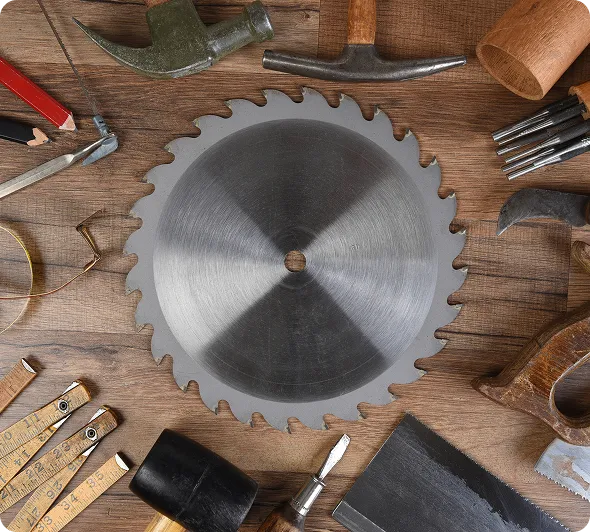
Slitter blades are commonly used in:
film, foil, laminates, label stock, pouches
paper, tissue, specialty papers, printed webs
packaging webs and washdown-adjacent converting stations
sheet/film conversion and downstream trimming operations
To quote a slitting set accurately, we need both knife specs and line context. Provide what you have:
validate edge quality, dusting behavior, and rewind stability before scaling.
revision control for geometry, edge prep, and stack-critical dimensions.
[LEAD TIME] (depends on material, heat treat, coating, and inspection scope).
[MOQ] (sets can start small; pricing improves with volume and standardization).
Share your knife specs and slitting method—or send a sample—and we’ll define a quote scope aligned to your cut quality targets.