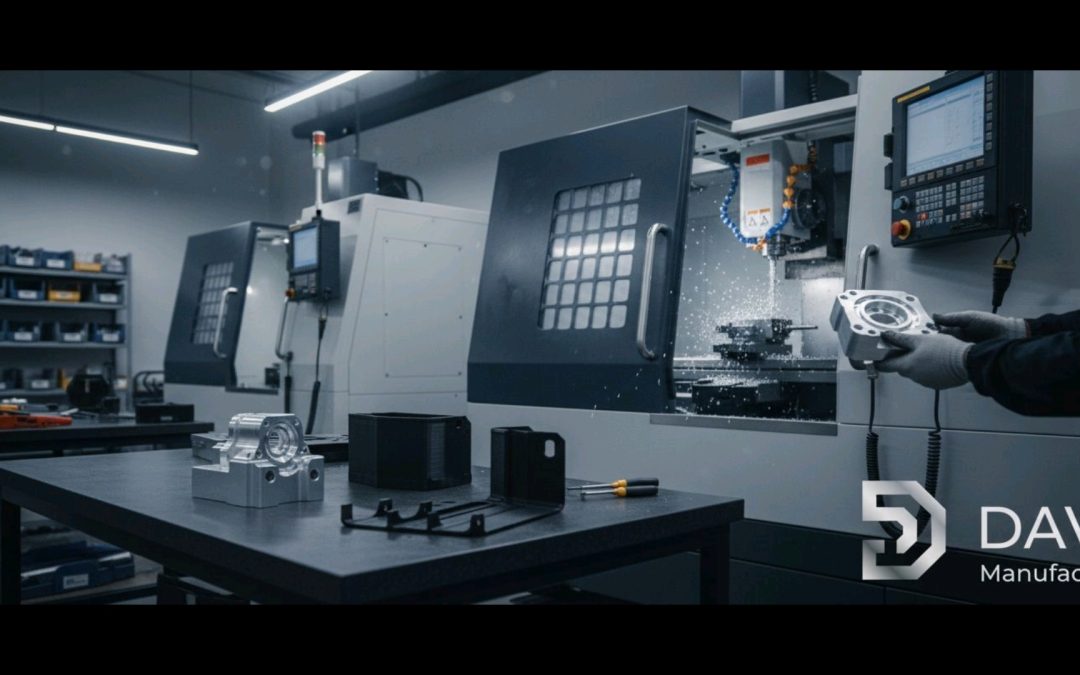
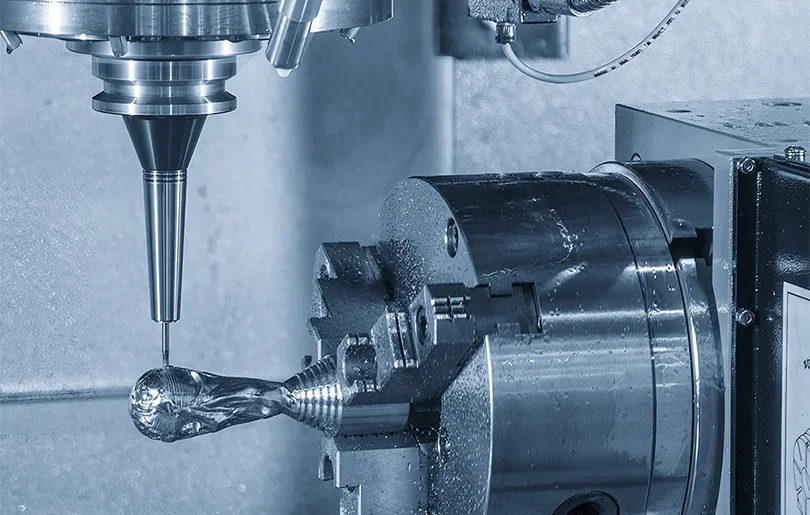
When a machined or fabricated part leaves the cutting stage, its geometry may be complete, but its surface is rarely ready for its intended environment. Surface finishing services are what transform a raw machined part into a component that meets the functional, aesthetic, and durability requirements of its application.
For engineers and purchasing teams, choosing the right finishing process is not a cosmetic decision. It affects corrosion resistance, wear life, dimensional tolerance stack-up, coefficient of friction, electrical conductivity, and the long-term performance of the assembly the part belongs to. This guide covers the most widely used surface finishing services, explains how surface roughness affects the selection process, and provides a practical framework for making the right choice for your part.
Why Surface Finishing Services Matter Beyond Appearance
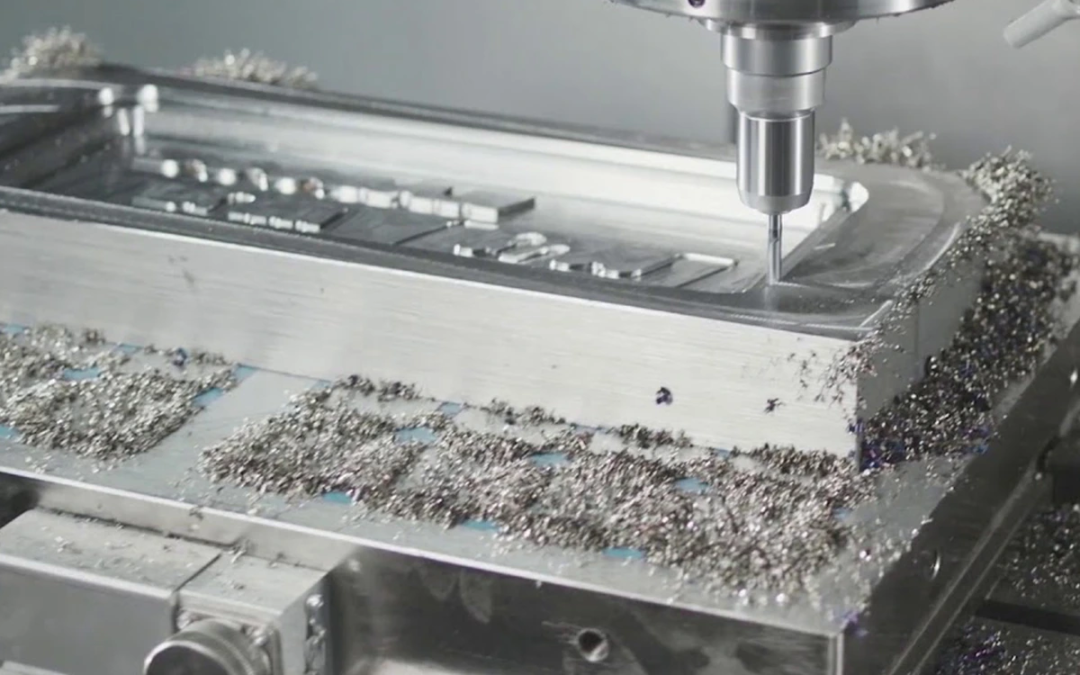
A freshly machined metal part has a surface that reflects the tool paths used to produce it. Depending on the cutting parameters, that surface may carry tool marks, micro-burrs, residual stresses, and a roughness profile that directly affects how the part performs in service.
Surface finishing services address these characteristics in different ways. Some processes remove material to create a smoother surface. Others add a coating or conversion layer to improve resistance to corrosion, wear, or chemical attack. Some do both simultaneously. The choice of process depends on the base material, the functional environment, the required surface roughness, and the production volume.
Specifying the right finishing process at the design stage, rather than after the part is already machined, avoids costly rework and ensures that dimensional allowances are made for any coating thickness that will be added. At Davion Manufacturing, we help you select and integrate the ideal surface finishing process early, ensuring quality and efficiency throughout production.
Real-World Surface Finish Applications
Surface finishing is the process of improving a material’s surface through techniques like polishing, coating, or grinding to enhance its appearance, durability, and resistance to wear or corrosion.
Automotive Industry
In the automotive industry, surface finishing plays an important role in both durability and appearance. Components such as interior panels, dashboards, and trim parts often use textured or matte finishes to reduce glare and minimise the visibility of scratches and wear over time. Additional finishing processes like powder coating or shot blasting may also be applied to improve corrosion resistance and create a consistent surface quality.
Medical Devices
For medical devices, surface finish quality is critical to ensure hygiene, safety, and regulatory compliance. Smooth and polished finishes are commonly used on device enclosures and components to minimise contamination risks and allow easy cleaning or sterilisation. Protective coatings and specialised finishing techniques may also be applied to meet strict cleanliness and durability standards.
Consumer Electronics
In consumer electronics, surface finishing is essential for creating a premium look and feel. High-gloss, matte, or textured finishes are often used on product enclosures and visible components to enhance aesthetics and improve user experience. Surface finishing may also provide added protection against scratches, fingerprints, and environmental wear.
Overview of Common Surface Finishing Services
Anodizing
Anodizing is an electrochemical process applied to aluminium and some titanium alloys. It converts the outer layer of the base metal into aluminium oxide, creating a hard, porous surface layer that is integral to the part rather than deposited on top of it.
Because the anodized layer grows partly inward and partly outward from the original surface, it adds very little to external dimensions, typically between 0.005 mm and 0.025 mm per surface for standard Type II anodizing. This makes anodizing compatible with tight-tolerance parts where dimensional change must be minimised.
Type III anodizing, also called hard anodizing, produces a thicker and harder layer suitable for wear-resistant applications. It is commonly specified for hydraulic components, sliding mechanisms, and parts subject to abrasive contact.
Anodizing improves corrosion resistance, provides a surface that can be dyed in a range of colours, and improves the part’s ability to accept adhesives and sealants. It does not significantly change surface roughness relative to the machined baseline, so the pre-anodize surface roughness of the machined part largely determines the final appearance.
Powder Coating
Powder coating is a dry finishing process in which electrostatically charged polymer powder is applied to a grounded metal part and then cured in an oven. The result is a uniform, durable polymer coating that adheres strongly to the substrate.
Powder coating is used on steel, aluminium, and other metals. It provides excellent corrosion resistance, a wide range of colours and textures, and good impact resistance. Coating thickness typically ranges from 60 to 120 micrometres, which must be accounted for in any dimensions that involve mating surfaces, threaded features, or close-clearance fits.
Because powder coating adds a relatively thick layer compared to anodizing, holes and threaded features are often masked before coating or chased with a tap after curing to restore thread form.
Electroplating
Electroplating deposits a thin layer of metal onto the part surface through an electrochemical process. Common plating types include nickel, chrome, zinc, tin, and gold, each selected for specific functional properties.
Zinc plating is widely used on steel fasteners and hardware to provide corrosion resistance at low cost. Nickel plating improves wear resistance and provides a bright, hard surface with moderate corrosion resistance. Hard chrome plating is used for high-wear industrial applications such as hydraulic rod shafts and industrial rollers. Tin plating is used in electronics for solderability.
Plating thickness is typically in the range of 5 to 25 micrometres for most industrial applications, with hard chrome sometimes applied at greater thickness for wear allowance. Because the plating follows the surface profile of the substrate, the pre-plate surface roughness directly determines the post-plate roughness. If a smooth plated surface is required, the substrate must be polished before plating.
Bead Blasting and Shot Blasting
Bead blasting uses spherical glass or ceramic media propelled at the part surface to create a uniform matte texture. Shot blasting uses harder angular media to clean scale, rust, and contamination from metal surfaces and can also introduce compressive residual stresses that improve fatigue resistance.
Both processes are often used as preparation steps before a coating or plating operation. Bead blasting removes machining marks and creates a consistent surface texture that improves paint or powder adhesion and gives the part a uniform visual appearance. The surface roughness after bead blasting is typically in the range of Ra 1.6 to Ra 3.2 micrometres depending on media size and process parameters.
Shot peening, a more controlled form of shot blasting, is specifically used to improve fatigue life on springs, gears, and structural components by inducing compressive stresses in the surface layer.
Mechanical Polishing
Mechanical polishing uses progressively finer abrasive media to reduce surface roughness toward a mirror-like finish. The process can be carried out manually, with automated machinery, or with vibratory finishing equipment depending on part geometry and volume requirements.
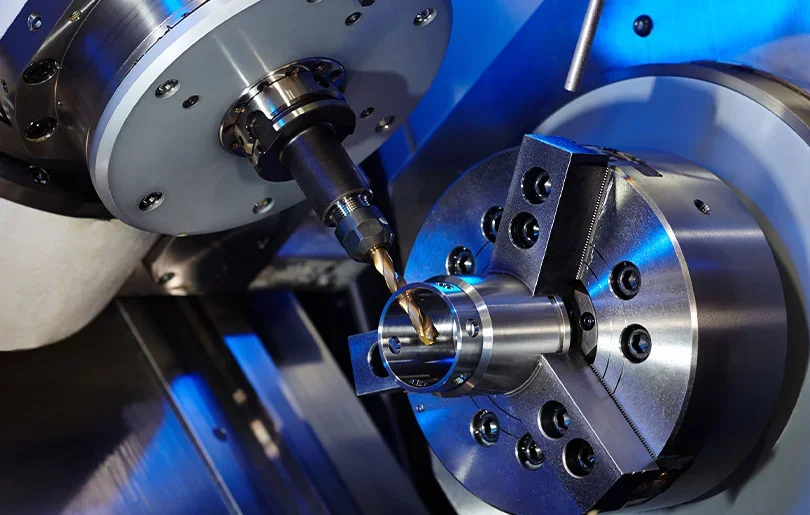
Polishing is used where the surface roughness specification is tighter than what machining alone can achieve, and where appearance is important. It is also used to prepare surfaces for subsequent plating, as plating will faithfully reproduce the substrate surface profile at the microscopic level.
Achieving surface roughness values below Ra 0.4 micrometres requires controlled polishing with fine abrasive compounds and is typically reserved for optical, hydraulic, and precision bearing applications where the surface roughness specification is driven by functional requirements rather than aesthetics.
Anodizing vs. Powder Coating: A Detailed Comparison
These two processes are frequently compared because both are used on aluminium and both provide corrosion resistance and colour. However, they differ significantly in their mechanism, properties, and appropriate applications.
| Factor | Anodizing | Powder Coating |
|---|---|---|
| Process type | Electrochemical conversion | Polymer coating |
| Base material | Aluminium, titanium | Steel, aluminium, most metals |
| Coating thickness | 5 to 25 micrometres (Type II) | 60 to 120 micrometres |
| Dimensional impact | Minimal | Significant on tight features |
| Hardness | High (Type III: very high) | Moderate |
| Corrosion resistance | Good to excellent | Excellent |
| Colour options | Dyes (limited palette) | Very wide range |
| Surface roughness change | Minimal | Texture depends on powder type |
| Typical use cases | Aerospace, hydraulics, electronics | Structural, architectural, general industrial |
| UV resistance | Moderate | Good to excellent |
| Repairability | Difficult | Localised repair possible |
The decision between anodizing and powder coating comes down primarily to dimensional tolerance requirements, the substrate material, the mechanical demands of the application, and the aesthetic requirements. For aluminium parts with tight tolerances or wear requirements, anodizing is generally the better fit. For steel structures, enclosures, and parts where colour durability under UV exposure is important, powder coating is typically more appropriate.
Surface Roughness and Finishing: Matching Process to Specification
One of the most common specification errors in manufacturing is applying a finishing process without considering how it interacts with the surface roughness requirement on the drawing.
The following general relationships apply when specifying surface finishing services:
- If the drawing specifies Ra 0.8 or finer, polishing or lapping is required before any coating is applied, because standard machining does not reliably achieve this value and most coatings will not improve it.
- If a tight dimensional tolerance applies to a coated surface, the coating thickness must be subtracted from the machined dimension before finishing. This requires coordination between the machining and finishing stages.
- If anodizing or plating is specified on a surface with a roughness requirement, the machined surface roughness before finishing should be specified on the drawing, because the process will not substantially improve it.
- Surface roughness on non-critical surfaces can be left to the manufacturer’s standard, but functional surfaces including seals, bearings, mating faces, and sliding contacts should always carry an explicit roughness call-out.
Working with a CNC machine service provider that also handles post-processing in-house reduces the risk of specification errors and ensures that machining parameters are set with the finishing process in mind.
Surface Roughness and Coating Considerations
Beyond visual appearance, surface finish is often defined by measurable roughness values, typically expressed as Ra (average roughness). These values are important in determining how a part will perform in real-world conditions.
For example:
- Ra 3.2 µm is common for general machining and functional surfaces where appearance is not critical.
- Ra 0.8 µm or lower is used for precision components, sealing surfaces, or parts that require minimal friction and high smoothness.
Injection molding can achieve very low surface roughness directly from a polished mold, making it suitable for applications where smooth finishes are required without additional processing. Die casting, while capable of good surface quality, often requires secondary finishing operations to reach lower roughness values.
Coatings and finishing processes also play an important role in final part performance and dimensional accuracy. These coatings add material to the surface, which must be considered during design and tolerance planning.
Typical coating thickness ranges include:
- Anodizing: adds approximately 5–25 µm
- Powder coating: adds approximately 50–150 µm
These thicknesses can affect tight tolerances, especially in precision assemblies or mating parts. Engineers must account for coating buildup during the design phase to avoid fitment issues in the final product.
Surface finish is one of the clearest practical differences between injection molding and die casting, and it directly affects whether a part needs additional work after it comes out of the tool.
Post-Processing Considerations for CNC Machined Parts
For parts produced through CNC machining, the finishing process should be considered during the design and programming stage, not after the part is already cut.
Key considerations include leaving adequate material stock on surfaces that will be ground or polished to final dimension, masking threaded or precision-bore features before coating, and ensuring that internal features accessible only through small openings can be adequately processed by the chosen finishing method.
Parts with complex internal geometries, deep pockets, or blind holes may not be uniformly coated by immersion or spray processes. For such geometries, a discussion with the finishing supplier about coverage limitations before committing to a process prevents quality issues downstream.
For teams working with a CNC machining near me supplier or a metal machining near me provider, integrated machining and finishing capability simplifies project coordination and reduces lead time by eliminating the need to ship parts between separate facilities.
Conclusion
Surface finishing services are an integral part of the manufacturing process, not an afterthought applied once the machining is done. The right finishing choice affects corrosion resistance, wear life, dimensional fit, electrical properties, and the long-term reliability of the part in its intended application.
Understanding surface roughness and how it interacts with different finishing processes is the foundation of a good specification. Whether the application calls for anodizing, powder coating, electroplating, mechanical polishing, or a combination of processes, matching the finish to the functional and environmental demands of the part will always produce a better outcome than selecting a process based on cost or familiarity alone.
Contact Us today If you need expert advice on surface finishing and machining coordination, reach out to our team today. We’ll help you optimize your manufacturing process for quality, cost, and reliability.
Frequently Asked Questions
- What surface finish should I choose for my part?
Choose based on material, environment, function, and tolerances. Anodizing or powder coating suits corrosion protection, while hard anodizing or chrome works for wear resistance and sliding surfaces. - How does surface roughness affect part performance?
Surface roughness influences friction, wear, sealing, coating adhesion, and fatigue strength. Too rough may cause wear or leaks, while overly smooth surfaces may reduce bonding or grip. - What is the difference between anodizing and powder coating?
Anodizing forms a thin, hard oxide layer on aluminium with minimal dimensional change. Powder coating adds a thicker coloured polymer layer, better for aesthetics but less ideal for tight tolerances. - Does finishing affect dimensional tolerance?
Yes. Coatings add thickness to surfaces. Processes like powder coating or plating can change part dimensions, so designers must account for coating thickness on functional surfaces. - Can all metals be anodized?
No. Anodizing mainly applies to aluminium and sometimes titanium. Steel and other metals use alternative finishes such as plating, powder coating, phosphating, or other treatments.