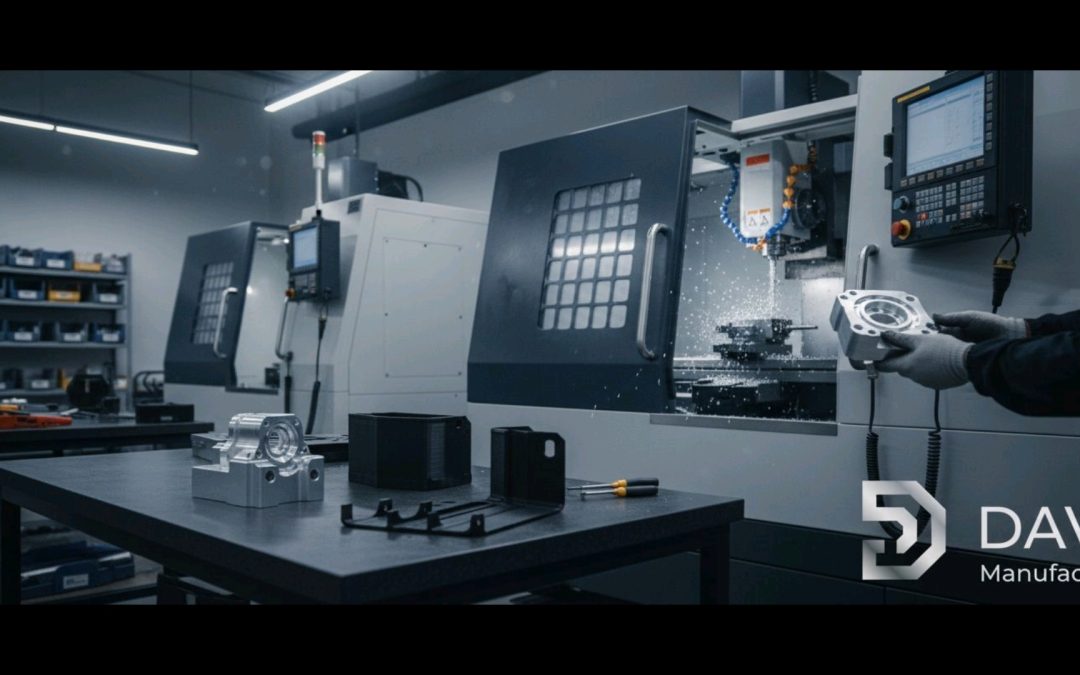
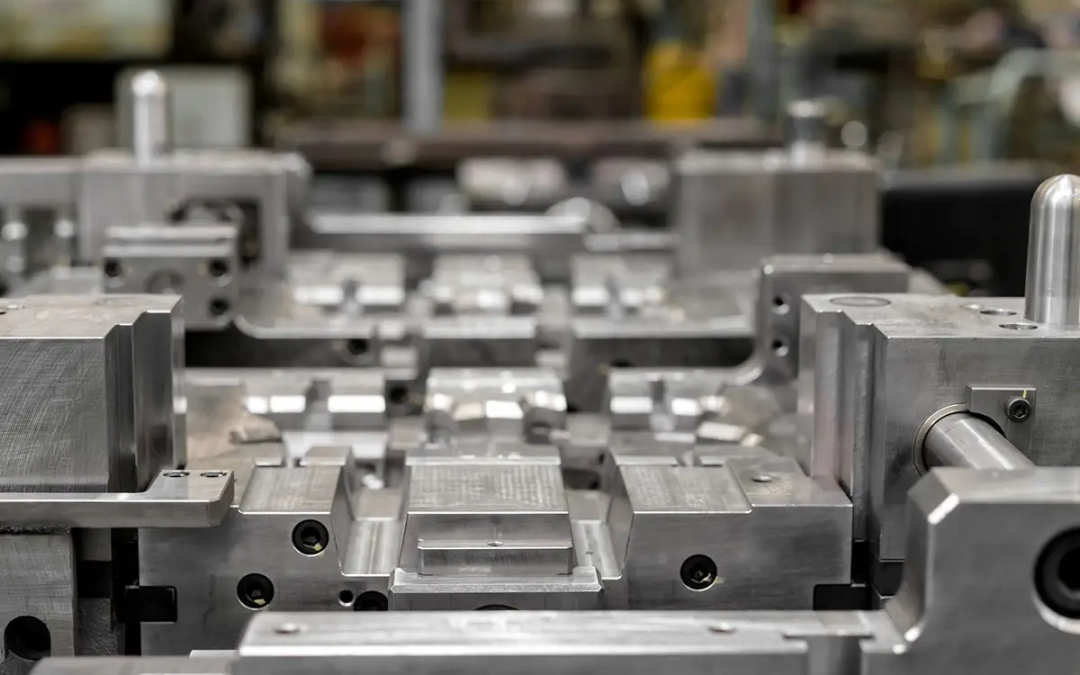
When a product development engineer or manufacturing team is evaluating process options, the question of whether injection molding or die casting is the better choice comes up early and often. Both are high-volume manufacturing processes. Both rely on tooling to shape material into precise, repeatable parts. But they differ significantly in the materials they work with, the tooling costs they require, the lead times they demand, and the mechanical properties they deliver.
This comparison is designed to help product developers and manufacturing engineers make an informed decision based on production volume, budget, part requirements, and timeline. There is no universally correct answer to the question of which process is better. The right choice depends on the specific demands of your project.
Understanding the Two Processes
What Is Injection Molding?
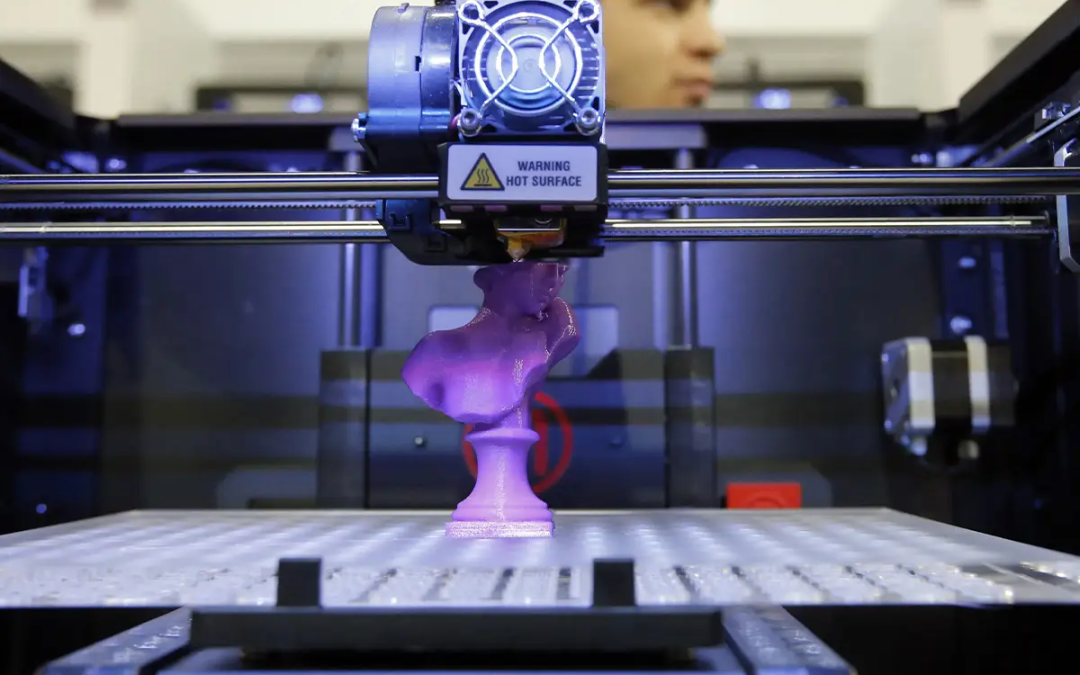
Injection molding is a manufacturing process in which molten material, most commonly thermoplastic polymer, is injected under high pressure into a precision-machined Mold cavity. Once the material cools and solidifies, the Mold opens and the finished part is ejected. The cycle repeats continuously, producing identical parts at high speed.
Injection molding is the dominant process for manufacturing plastic components at scale. It is used across industries including automotive, consumer electronics, medical devices, packaging, and industrial equipment. The process can produce highly complex geometries, tight dimensional tolerances, and fine surface finishes in a single operation.
The mold design is the central investment in any injection molding project. A well-engineered mold determines part quality, cycle time, and the range of features that can be produced without secondary operations.
What Is Die Casting?
Die casting is a manufacturing process in which molten metal, typically aluminium, zinc, or magnesium, is injected under high pressure into a hardened steel die. The metal solidifies rapidly in the die, the die opens, and the part is ejected. Like injection molding, the process is inherently repetitive and suited to high-volume production.
Die casting is used where metal properties are required, including higher strength, thermal conductivity, electrical conductivity, or dimensional stability under heat. Common applications include automotive housings, structural brackets, heat sinks, and enclosures for electrical components.
Tooling Costs: Where the Investment Lies
Tooling cost is one of the first practical considerations for any manufacturing project, and it differs substantially between the two processes.
Injection Molding Tooling
Mold design for injection molding is the primary upfront cost. A single-cavity production mold in tool steel or more depending on part complexity, number of cavities, material requirements, and the features built into the mold such as side actions, lifters, or hot runner systems.
The mold design phase is also where the most critical decisions are made. Gate placement, cooling channel layout, draft angles, and wall thickness uniformity all affect both part quality and cycle time. A well-executed mold design reduces per-part cost and minimises the risk of defects in production.
Multi-cavity molds, which produce several identical parts per cycle, increase tooling investment but reduce the per-part cost significantly at higher volumes. For a product that will be produced in tens of thousands or hundreds of thousands of units, the tooling investment is recovered quickly.
Die Casting Tooling
Die casting tooling is generally more expensive than injection molding tooling for equivalent part complexity. The dies must withstand the temperatures and pressures involved in working with molten metal, which requires more robust tool steel and more intensive machining.
The lead time for die production is also longer. Where an injection mold might be completed in four to eight weeks, a die casting tool for a complex part can take twelve to sixteen weeks or more.
For projects with a short development timeline or a limited initial production run, this difference in tooling cost and lead time can be a decisive factor.
Material Selection: Plastic vs. Metal
Material selection is often the starting point for the decision between the two processes, because the functional requirements of the part largely determine which material family is appropriate.
When Plastic Makes Sense
Injection molding works with a broad range of thermoplastic materials, each with different mechanical, thermal, chemical, and aesthetic properties. Common materials include ABS, polypropylene, nylon, polycarbonate, PEEK, and glass-filled variants of many of these.
Plastic parts produced through injection molding are light, corrosion resistant, and can be produced in a wide range of colours and surface finishes without secondary operations. For consumer products, enclosures, fluid handling components, and parts where weight reduction is a priority, plastic injection molding is typically the appropriate process.
The mold design must account for the specific shrinkage rate and flow characteristics of the chosen material, which vary between polymer families and even between grades of the same polymer.
When Metal Is Required
Die casting is the appropriate process when the finished part needs the mechanical properties of metal. Higher tensile strength, resistance to elevated temperatures, thermal or electrical conductivity, and the ability to bear structural loads are all properties that thermoplastics generally cannot match.
Aluminium die casting is particularly common for automotive and industrial components where weight relative to strength is important. Zinc die casting is used where very tight dimensional tolerances and a fine surface finish are required. Magnesium is selected where minimum weight combined with reasonable strength is the priority.
Production Scaling: Volume and Cost Per Part
Both processes share the economic characteristic that high tooling investment is offset by low per-part cost at scale. The crossover points at which the investment becomes worthwhile differs between them.
Injection Molding at Scale
Injection molding is highly cost-effective at medium to high volumes. For parts produced in quantities of 10,000 units and above, the per-part cost is typically very low, and the process can run continuously with minimal operator intervention. Multi-cavity tooling multiplies output without adding proportional cost.
For lower volumes, prototype tooling or aluminium tooling offers a lower entry cost with reduced tool life, which can be appropriate for market testing or bridge production before full-scale tooling is justified.
Working with an experienced injection molding company ensures that the Mold design is optimised for the intended production volume, which directly affects the economics of the project.
Die Casting at Scale
Die casting reaches its most favourable economics at high to very high production volumes. The higher tooling investment means that the breakeven point, the volume at which tooling cost per unit becomes negligible, is typically higher than for injection molding.
For production volumes below approximately 10,000 parts, die casting is often not the most cost-efficient choice unless metal properties are strictly required. For volumes above 50,000 parts, the per-part cost is competitive, and the process delivers consistent quality at speed.
Lead Time Comparison
Lead time encompasses both the time required to produce tooling and the time required to produce parts once tooling is complete.
For injection molding, tooling lead times typically range from four to eight weeks for standard complexity parts, though simpler tools can be completed faster and complex multi-cavity tools with hot runner systems may take longer. Once tooling is qualified, production lead times for injection molding are short, often measured in days to weeks depending on order volume.
Die casting tooling takes longer to produce, with lead times of eight to sixteen weeks being common for production dies. This reflects the more intensive machining and heat treatment required for metal-working dies.
For product developers working to a tight launch timeline, the shorter tooling lead time associated with injection molding can be a significant practical advantage. An injection molding service provider with in-house tooling capabilities can reduce total lead time further by managing both mold fabrication and production under one roof.
Strength and Mechanical Performance
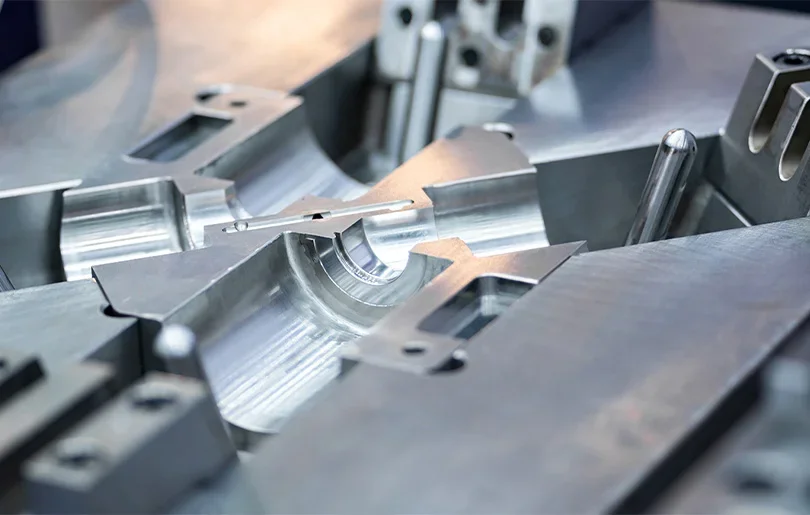
Strength is the area where die casting most clearly outperforms injection molding when working with standard thermoplastics. Aluminium die cast parts typically have tensile strengths in the range of 300 to 480 MPa. Standard engineering plastics used in injection molding range from around 50 MPa for polypropylene to 170 MPa or higher for glass-filled nylon.
However, the comparison is not always straightforward. For applications where the load is distributed across a large surface area, or where part geometry can be designed to manage stress effectively, plastic parts can perform adequately where metal might at first seem necessary.
Surface Finish Comparison
Surface finish is one of the clearest practical differences between injection molding and die casting, and it directly affects whether a part needs additional work after it comes out of the tool.
Injection Molding
In injection molding, the mold cavity surface is reproduced directly onto the plastic part. A polished mold produces a glossy finish. A textured mold produces a matte or grain pattern. Colour is blended into the material before molding, so many parts require no painting or coating at all. For consumer-facing products where appearance matters, injection molding can deliver a finished cosmetic surface straight from the tool.
Die Casting
Die cast parts come out of the tool with a reasonable surface quality, but they rarely meet cosmetic standards without additional work. Parting lines, ejector pin marks, and minor surface irregularities are common. Parts that need a clean or attractive appearance typically go through secondary operations such as shot blasting, vibratory finishing, painting, or powder coating before they are ready for use.
The Bottom Line
If surface appearance is a priority, injection molding requires less post-processing. Die casting produces functional surfaces but usually needs finishing work to meet cosmetic requirements.
Wall Thickness Comparison
Wall thickness is one of the most important design considerations in both injection molding and die casting, and the two processes have different requirements, different failure modes, and different design rules that engineers need to understand before committing to tooling.
How Wall Thickness Works in Injection Molding
In injection molding, the guiding principle is uniformity. When wall thickness is consistent throughout a part, the molten plastic fills the cavity evenly, cools at a predictable rate, and solidifies without introducing internal stress. When walls vary significantly from one section to another, the thicker areas retain heat longer than the thinner areas surrounding them. This uneven cooling creates stress within the part that can cause warping after ejection, sink marks on the outer surface directly above thick sections, or structural weakness that only becomes apparent under load during use.
For this reason, injection molded parts are designed with consistent wall thickness throughout wherever possible. Where a section needs to be thicker for structural reasons, ribs and gussets are used to provide strength without adding solid mass. Thick sections that cannot be avoided are cored out from the inside to bring the effective wall thickness back in line with the rest of the part. Getting this right at the design stage prevents expensive tooling modifications later.
How Wall Thickness Works in Die Casting
In die casting, the concern is different. Molten metal must travel through the entire die cavity and reach every corner before it begins to solidify. Walls that are too thin restrict metal flow, causing incomplete fills and surface defects on the finished part. Walls that are too thick create a different set of problems. As the metal cools, gas can become trapped within thick sections, creating internal porosity that weakens the part structurally and may not be visible from the outside.
The minimum wall thickness achievable in die casting depends on the alloy being used. Zinc, which flows more freely than aluminium, can achieve thinner walls. Aluminium requires slightly more thickness to ensure complete and consistent fill across the cavity.
Key Difference to Remember
The simplest way to understand the difference is this: injection molding demands uniform walls to control cooling, while die casting demands adequate wall thickness to ensure complete metal fill. Both processes punish poor wall thickness decisions with defects that are difficult and costly to correct once tooling is already in production.
When to Choose Injection Molding
Injection molding is typically the better choice when:
- The part is primarily plastic and does not require metal properties.
- Production volume is medium to high and per-part cost efficiency is important.
- The part has complex geometry, thin walls, or features that would be difficult to achieve in metal.
- Weight reduction is a design requirement.
- Surface finish and colour integration are important without secondary painting or plating operations.
- Tooling lead time needs to be minimised relative to die casting.
- The project is at a stage where lower tooling investment reduces financial risk.
When to Choose Die Casting
Die casting is typically the better choice when:
- The part must be made from metal for structural, thermal, or electrical reasons.
- Production volume is high enough to justify the tooling investment.
- The part will be exposed to elevated temperatures that thermoplastics cannot withstand.
- Dimensional stability under load or heat is a design requirement.
- The finished part needs to conduct heat or electricity.
- A metal appearance without plating or coating is required.
Working with a Manufacturing Partner
Whether the process selection points toward injection molding or die casting, the quality of the manufacturing partner matters as much as the process itself. Mold design decisions made early in the project have a lasting effect on part quality, cycle time, and production cost. A partner with strong engineering capability can identify design for manufacturability issues before tooling is cut, saving time and cost that would otherwise be spent on mold modifications.
For teams evaluating plastic injection molding near me options or looking for injection molding companies near me with full-service capabilities, the ability to handle mold design, tooling, and production in an integrated way is a meaningful advantage.
Conclusion
The question of whether injection molding or die casting is better for production does not have a single answer. It depends on the material the part requires, the production volume planned, the tooling budget available, the lead time constraints of the project, and the mechanical performance the application demands.
Injection molding offers lower tooling costs, shorter lead times, excellent design flexibility, and strong economics at medium to high volumes for plastic parts. Die casting delivers superior mechanical properties for metal parts at high production volumes where the tooling investment can be justified.
For most product development teams, the decision becomes clear once the part requirements are evaluated against these factors systematically. Engaging an experienced manufacturing partner early in the design process, one with capability across both injection molding and casting, provides the engineering input needed to make that decision with confidence.
Contact Us today If you are evaluating injection molding or die casting for your project and need expert guidance, contact our team today. We can review your design, recommend the most suitable manufacturing process, and help you optimize cost, performance, and production timelines.
Frequently Asked Questions
- Is injection molding or die casting better for small production runs?
Injection molding is usually better for small runs because tooling costs are lower and lead times are shorter. Prototype or aluminum molds reduce upfront investment, making it viable for a few hundred parts, while die casting tooling is typically too expensive for low volumes. - How does mold design affect the final part cost?
Mold design directly impacts part cost. Efficient cooling channels, proper gate placement, and balanced flow reduce cycle time and material waste. Poor mold design can cause longer cycles, higher scrap rates, and costly tool modifications after production starts. - Can injection molding produce parts as strong as die casting?
Metal die cast parts are generally stronger in tensile and yield strength. However, reinforced plastics like glass-filled nylon can provide high strength for many applications. With proper material selection and design, injection molded parts can meet many structural needs. - What is the typical lead time difference between the two processes?
Injection molding tooling usually takes about 4–8 weeks depending on complexity. Die casting molds often require 8–16 weeks due to higher temperature and durability requirements. Once tooling is ready, production speeds are similar, though injection molding cycles are often faster. - How do I choose the right material for injection molding?
Material choice depends on strength, heat resistance, chemical exposure, and appearance. ABS suits general use, polycarbonate offers impact resistance, nylon provides strength and wear resistance, and polypropylene works well for chemical resistance and flexible parts.